Why do I keep getting the same injuries when I run? – Part 2
 In last week’s blog post ( week of February 25, 2018), we discussed how your knee is usually not to blame when it hurts during runs. And we specifically addressed how often over-pronation issues can really impact the knee.
There is an old saying that is ‘as the foot goes so does the knee.’ This is very true.
Pronation is not inherently a bad thing. In fact we need to pronate through our feet. It is how we properly transfer forces through our body.
Pronation is the foot movement in which your foot rolls in causing your arch is getting to get lower. But when we over-pronate we put our other joints as risk for injury…including our feet.
But how do you know if you pronate too much? Do you know if your shoes are enough to provide the support you need?
Try this: Get the bottom of your feet damp and then step on a piece of paper. If your footprint has no gaps/indentation in it, you most likely have flat feet and need more support than you could get from most shoes.
 [Aside: if you read Born to Run and think everyone should be running around barefoot, we have about 100 past patients that were injured
by running in minimalist shoes who would tell you differently. Barefoot running can be appropriate for some runners, but certainly not all of them.]
Over-pronation can often be caused by having flat feet. The arch is NOT meant to be a weight-bearing surface of your foot. When your arch becomes a weight-bearing surface, problems begin to happen. The knee collapses and the hip begins to rotate inward. If you repeat this enough, injury is not far off.
So what can you do if you over-pronate and are at risk of injury (or already hurting)? A good pair of supportive shoes is a great place
to start. Since every foot, body type, and running style is different, we can’t suggest specific shoes here in this article without evaluating your feet. So our best advice is to make sure you choose your running shoes with the assistance and guidance of a professional who has a lot of experience working with runners and shoe selection.
Though strength is very important, when your full body weight is coming down on one foot during your running stride, there’s only so much that the muscles in your feet can do. For those who severely over-pronate and collapse through the arch, even strong feet and supportive shoes may not be enough to avoid running injuries at the foot, ankle, knee, hip, or low back.
In this situation, Custom Orthotics are your best bet. They are an assistive device that are placed in your shoe to provide the exact level of support you need and to help distribute forces more evenly through the foot and up the leg. We have seen people with debilitating foot, knee, hip and back pain get amazing relief and the ability to return to running once they started using custom orthotics.
The market is filled with many options of what to put under your feet. Most over-thecounter shoe inserts and arch supports do not provide the support needed by someone who has significantly flat feet.
At Manual Medicine Spine & Sports Physical Therapy, we are experts in evaluating the foot and in the creation of custom orthotics. If you have any foot, knee, hip, or back pain when you run, it may have something (or everything) to do with your feet. If you’d like to have a free assessment of your feet and whether or not you would have less running pain with custom orthotics, call me at 202-670-8874.

This past October I was invited to fly out to L.A. and audition to become a POP Pilates®Master Trainer. I was so excited to meet Cassey Ho, who is the creator of POP Pilates® and Blogilates. It was an amazing weekend full of learning and sweating, and at the end of it, I was thrilled to be offered a spot on the team.
POP Pilates® is a Pilates-inspired dance fitness class that fuses ab-chiseling and total body defining moves choreographed to upbeat pop songs. This intense, mat-based workout challenges students to rhythmically flow from one exercise to the next, developing a rock solid core while leaving no muscle untouched. Most POP Pilates® moves originate from classical mat Pilates and share the fundamentals of breathing and core engagement. The difference is in the class design, the relationship with music, and the sequencing and reps. We like to say that the class is like a “dance on the mat,” and while the movements are challenging your body, the flow of the class is challenging your brain and strengthening your coordination skills. And my favorite aspect of POP Pilates® is the inclusive nature of the class, with options to modify and progress most movements to make them an appropriate challenge for all fitness levels.
As a POP Pilates® Master Trainer, my job is to travel across the country to lead day-long instructor certification classes. Each one starts with a POP Pilates® Master Class, and then we dive deep into the structure of the class, how to work with music, and teaching techniques. Typically only about half of my students getting certified have ever taught a fitness class before, and that creates an incredible learning environment for both new and seasoned instructors. Experienced instructors are amazing resources for the beginners, and the beginners bring a fresh perspective and energy that is so inspiring. And the incredible part about teaching POP Pilates® is the community of teachers there to answer questions, give advice, and offer support and encouragement to one another. I stay in touch with many of my certification students, and it’s so exciting to see them now taking on permanent classes in their hometowns. One of my students is taking her teaching to the next level and is actually in the process of opening her own studio!
 On Sunday, March 18th MINT will be hosting a POP Pilates Instructor Certification class from 9:30 AM – 5:30 PM at the Downtown studio. I’m so excited to lead a training here in DC, and I’m looking forward to bringing more amazing POP Pilates® instructors to our area. If you or someone you know is interested in teaching fitness, I encourage you to sign up for the training here.
And if you’ve never tried POP Pilates®, I’d love to see you in class on Wednesdays at 9:30 AM and Sundays at 2:35 PM in the main Mind Body studio at MINT Dupont!
If you have questions about the class or the certification training, please don’t hesitate to reach out to me via email at kathryn@mintdc.com

Free run. Discounted Food. Sounds like a great Friday to us!
Come join us at 6:00pm on March 9th for a 5K run, starting and ending at Buredo on Connecticut Ave. $5 off meals for MINT members and their guests!
Why do I keep getting the same injuries when I run? – Part 1
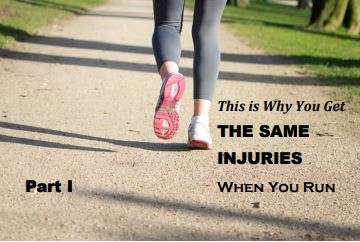 Are you frustrated with constantly dealing with same running injuries over and over again? Are you tired of thinking you have recovered only to have the same injury come back several months later? Read on to find out why you are dealing with repetitive injuries.
A wise man once said “running reveals weakness and if you run enough, injury is not too far away.” When you run, you experience 2-3 times the force of your own bodyweight!.. with every step! Over the course of a run you experience an extreme amount of force through your joints which can lead to injury.
What if you could get to the underlying cause of your injuries that keep plaguing you and keep you from doing what you love? What if you knew exactly what to do to prepare for your upcoming 5K,10K, or even half marathon?
Research has shown that up to 80% of runners will experience some injury during their running lives.
The most common injury they will experience is knee pain. The knee is a simple hinge joint that is wedged between your hip and your foot, and the reality is that your knee is usually not to blame!!
Knee pain is usually either a result of poor hip control or over-pronation issues. Pronation is a natural motion of the foot that happens when your foot contacts the ground and your arch goes inward. Over-pronation is when your arch collapses too
much, placing increased stress on all the joints above.
In Part 2 of this blog post (stay tuned next week – March 3, 2018) we will discuss about what to do about your over-pronation issues. The first joint above the foot/ankle just happens to be your knee, and often takes the brunt of any issues in the foot.
Poor hip control and hip muscle weakness is another common problem that leads to increased stress on your knee, and we will explain more about how to avoid this issue in Part 3 of this blog post ( stay tuned week of – March 11, 2018)
So to answer the question in the title of this blog post: if you continually get the same injury as you ramp up your mileage, then rest and/or whatever “treatment” you’ve had to solve the problem is not removing all the underlying causes of the injury.
In today’s unfortunate healthcare world, clinicians are often forced to see many more patients per day than they should. If a patient has knee pain, they only have time to look at the knee … but as you’ll see in the next two articles, this will often lead to missing the whole story, and therefore failing to address why you keep getting the same running injuries over and over again. If you need help, Call my office at once at (202) 670-8874 or visit me at the Mint Health Club to schedule your 30 minute consultation to see how Physical Therapy can help. Don’t delay–schedule now so we can assess your specific issue and get you fit and injury-free for the Rock N Roll Marathon on March 10, 2018.

Flash sale! 50 pack stock-up promo Extended by popular demand
$10/session off lowest rates
No expiration date on these sessions/cannot be purchased with discounted gift cards
Dear Foodies, Let’s talk food! It’s no secret diet and nutrition play a major role in our lives. Without proper nutrition, the body cannot and will not adapt to forced change, i.e. maintenance, bulk or shred. When we don’t eat upon waking and then workout; we deprive our metabolism of fuel to burn for energy shutting down ATP. In addition to the harsh physical effects there are emotional and mental effects. Nutrition is a vital role in our moods, cognitive response, neuro receptors, sleep, and of course our eating patterns. What to do before and after a workout:
- Eat! Eat! And Eat! Before a workout.
- Carb based and medium glycemic foods like bananas, apples, nut butters are great pre-workout fuel.
- Hydrate before workouts. Try to consume water before working out to avoid dehydration.
- Post workout is time to replenish and recover. A low glycemic carbohydrate and high protein diet is great to begin rebuilding muscle tissue and also restore energy.
- Eat organic, pesticide free, no – GMO, hormone free foods!


Getting sick is inevitable. In fact, most adults usually get two to three respiratory infections each year. However, we all have obligations that cannot wait, especially if it’s a newly made New Year’s resolution. It can certainly feel like a huge setback, and more
so when it involves a new focus on getting healthier. The past 3 weeks, we’ve been hearing a lot about the rampant flu. Just 2 days back, NBC had a story covered on this year’s flu epidemic.
Last week, I came down with a bad cold, and it totally affected my ability to engage with people in my life let alone exercise. Thankfully, I bounced back quickly. A number of my patients have been asking me this week, whether it is okay to exercise when they’re
feeling sick. So I figured, I’d write a blog post with some helpful tips about it.
Common sense should tell you that if you have a little cold, then scale back the intensity and duration of your workout. However, there are instances where you should back off completely and take time off. Here are some considerations so you know the difference.

Let us start with an easy rule to remember–if your symptoms occur from your neck up, then it’s alright to perform a light exercise routine. If, however, your symptoms travel below your neck–stay home! In other words, if you have a common cold, which is often
limited to upper respiratory symptoms like a runny or stuffy nose, then it is usually okay to exercise. However, if you are experiencing general achiness, Gastric symptoms, chest congestion, or profound weakness, then stay home and drink plenty of fluids.

Now let me clarify one exception to the “above the neck” rule, and that being whether you have a fever. Since a fever is going to raise your body’s core temperature, which will also most likely get you dehydrated, you do not want to add insult to injury by taxing
your body with any type of exercise workout. In addition, once your fever has broken or you have recovered from a bad illness, it is best to avoid exercising for at least the next 24 to 48 hours. Moreover, when you do finally resume your exercise routine, do not pick up where you left off–ramp up slowly.
Now, under normal circumstances (aside from being sick and exercising), regular, moderate activity can help your immune system which, in turn, helps to prevent future illness. Note–the key word being moderate. Whenever you perform extreme exercise
at very high levels, then you compromise your immune system (think running a marathon).



When focusing on our diet, it is important to not only look at what you eat and how much of it you’re eating, but you need to also pay attention to when you eat. For instance, fruit is a healthy food, as a general rule, but for those looking to lose weight they should make sure they’re not eating fruit in the late afternoon and evening. Fruit is high in carbohydrates, sugar, and is slow to breakdown. So, although you may be opting for a bowl of fruit as a snack or dessert instead of a cookie, you may not be doing as much for your diet as you may think.
Begin aware of the time of day, when planning meals and snacks, is an easy way to make small, effective changes. Below are some other insider tips to help you more effectively plan your food for the day, because let’s be honest, we’re always thinking about the next meal we’re going to eat.
• Your largest meal should be breakfast or lunch
• Yes! You can eat carbs (the more complex the better) but eat them early in the day
• Aim to eat something every 2-3 hours. This helps keep the body fueled and can help speed up your metabolism.
• Keep your carbs low in the afternoon and evening. Look for veggie or greek yogurt snacks.
• Remember to always stay hydrated and drink a lot of water throughout the day.
By: James Parker Ashley

A Recipe by Naturally Healthy Desserts We all know that Valentine’s Day is right around the corner. For those of you who want to celebrate with your special someone but don’t want to totally throw all of your hard work out the door we’ve got something for you! Skip dessert at the restaurant and make your own homemade vegan chocolate mousse at home! This is a dairy-free, gluten-free and most importantly refined-sugar free mousse that you can feel good about enjoying! Servings: 8 Prep Time: 5 minutes Passive Time: 4 Hours Ingredients: 2 cups cashews 2 cups almond milk 1 tablespoon vanilla extract 3 tablespoons refined coconut oil melted ¾ cu date paste ¾ cup cacao powder dash of salt
Instructions: 1. Place all ingredients into blender. Blend until silky and smooth consistency. (About 1 minute). 2. Refrigerate for 4 hours. Serve and enjoy. Note: This is an original recipe from Naturally Healthy DessertsPigeon pose is the king of all hip openers, one of the most versatile and potent poses to address tension and improve range of motion in the hips and lower body. It is a fantastic pose to dive into more deeply if you are a regular yoga practitioner—it is likely already a part of your practice in some form. But pigeon is also a great tool to incorporate into your routine more generally as a way to release and lengthen after running, cycling, or other types of exercise. It is also an essential counter-pose for all of us who sit for long hours during the day. However, pigeon is a complex pose that requires poses to open and prepare the body, to ensure that the knees, hips and low back are safe as you explore this deep stretch.
If you’ve never done pigeon before or if you have restricted movement in your hips or sacrum, or any knee injuries, start with the reclined version of pigeon pose on your back. To begin, lay on your back with knees bent, feet hip-width distance apart. Cross your right ankle over your left thigh, above the knee. Actively flex both feet then you can begin to draw your left knee towards your chest, threading your hands behind the left thigh. Make sure you continue to flex your right foot strongly to protect the knee joint and then gently press the right knee away from you to deepen the stretch in the outer right hip. Keep your head and shoulders releasing down to the mat to avoid creating tension in the neck. Do the other side.
When you’re ready to come into the full version of pigeon pose, start from table or downward facing dog. Bring your right knee forward to land slightly behind and to the right of your right wrist. Your shin can be diagonal or can come more parallel to the front of the mat depending on your flexibility. Engage the right foot to protect the knee joint. Then make sure your back leg is neutral, left outer thigh and outer hip rolling down into the mat. Actively lengthen the back leg down into the mat and lengthen up and out of the floor to elongate the left hip flexor and psoas muscles. If there is space between your right hip and the floor, place a block or folded blanket there for support. Breathe in the upright shape or begin to fold forward onto hands or forearms or rest onto a block in front of your front shin. Explore the other side—particularly with hip openers, you may find that the experience on one side of the body is different than the other.
In pigeon, as with all yoga poses, if you feel any pain or discomfort in your joints, back off and try a different variation. You may feel some intense sensation in this pose—make sure to keep breathing deeply!
Benefits of pigeon pose: Increases range of motion in hips, lengthens hip flexors, prepares body for backbends and seated poses, can reduce lower back pain associated with hip tension. Good counter pose for runners and cyclists as well as desk warriors—start with the reclined version if you haven’t practiced this pose before!
Contraindications: knee injury, sacrum instability or lower back injury.
We will be exploring variations on pigeon pose all month in our yoga classes. If you have questions or would like to dive deeper into your pigeon practice, talk to any of our MINT yoga instructors!
By: Kristin Adair