Knee pain can be stubborn. If you’ve tried stretching, strengthening, injections, or even surgery with little to no relief – it might be time to consider looking beyond your knee. Many people are told their pain is due to “wear and tear,” arthritis, or simply aging. But here’s the thing… There are plenty of people out there with these very same conditions who have no knee pain at all.
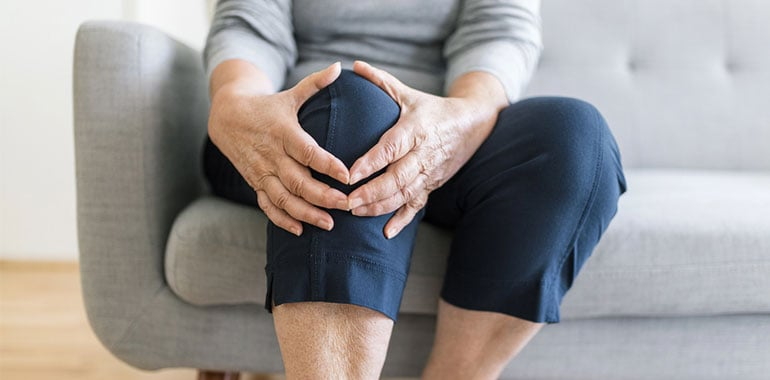
So, what gives?
It turns out that knee pain isn’t always a knee problem.
If you’re still dealing with persistent discomfort despite following every piece of conventional advice, one of these four lesser-known culprits might be the real reason behind your lingering knee pain.
1. It’s Not Your Knee—It’s Your Back
Did you know that nearly 40% of extremity pain actually originates from the spine – even if you don’t have back pain? The nerves that control your knee function start in your lower back. If they’re irritated, compressed, or not functioning properly, your knee could suffer the consequences.
A key sign that your knee pain is actually coming from your back is if your pain moves around, travels up or down your leg, or worsens when you sit for long periods. If your knee treatments aren’t working, it’s worth investigating whether your back is the real issue by talking to a mechanical back pain specialist.
2. Your Core is Weaker Than You Think
When people hear “core strength,” they usually think about back pain or six-pack abs – but your core plays a massive role in knee health, too. Your core, hips, and glutes work together to stabilize your lower body. If these muscles are weak, your knees pick up the slack, leading to unnecessary strain and chronic discomfort.
Signs of a weak core affecting your knees include feeling unstable on one leg, difficulty maintaining good posture, or knee pain that worsens after prolonged activity. The solution? Strengthening your core and hips can take the pressure off your knees and keep them moving the way they should.
3. Your Ankles Might Be the Problem
Your ankles act as the foundation for your entire lower body. If they lack mobility or stability – your knees will compensate – leading to stiffness, pain, and dysfunction. Poor ankle mobility can make everyday movements like walking, running, and squatting much harder on your knees.
If you struggle with ankle flexibility or feel unsteady during activities like hiking, running, or sports – your knee pain may actually stem from weak or restricted ankles. Addressing ankle stability and mobility could be the missing link to finally getting relief.
4. Your Knee Isn’t Moving the Way It Should
One of the most overlooked aspects of knee pain is mobility. There might actually be nothing at all wrong with your knee – but if it doesn’t move as well as it should – structures within and around your knee joint will slowly start to get irritated. Most rehab programs focus on bending the knee – but proper knee function also requires slight hyperextension – and this is where I see a lot of problems for people. If your knee stops at “just straight,” it may still be restricted, causing long-term dysfunction and discomfort.
Pro-tip: This is especially common after surgery, where full mobility isn’t always restored. If one knee doesn’t move like the other, it’s time to work with a mechanical knee pain specialist who can prescribe corrective movements to help you regain that lost range of motion.
What to Do Next
If you’ve been dealing with knee pain that just won’t go away – there’s a good chance you either have the wrong diagnosis – or the wrong treatment plan. You may need to stop focusing on the knee and start to look elsewhere in your body. The real problem might be coming from your back, core, ankles, or mobility restrictions somewhere leading to secondary stress on your knee joint.
A mechanical pain specialist who understands the bigger picture can help pinpoint the true cause of your pain and create a plan that actually works to finally get your knee pain resolved.
CLICK HERE to request a Back Pain Strategy Session from a back pain specialist at my clinic, or email at trupti@mmsspt.com, or CALL (202) 670 8874 for a FREE telephone consultation so we can ask you some questions and help you better.
Trupti Mehta PT, MS, OCSManual Medicine, Spine & Sports Physical Therapy, Washington DC

There’s a new rhythm heading to the MINT dance floor—please join us in welcoming Emani Kelley, our newest Zumba instructor! Starting as a sub for our dance classes, Emani will be jumping in to lead Zumba whenever we can fit her into the schedule—and trust us, you’ll want to be there when she does.
Certified since 2023 and a longtime member of the global Zumba community, Emani brings contagious energy, thoughtful movement, and an inclusive spirit to every class she teaches. Her carefully curated playlists celebrate worldwide rhythms, including Latin, Reggaeton, Hip Hop, and Afrobeats, turning every workout into a full-on dance party. But don’t let the fun fool you—her classes are designed to challenge and uplift, encouraging you to move with joy, confidence, and freedom no matter your fitness level.
With a background as a competitive runner and lifelong lover of movement, Emani is all about building community through music and motion. She believes in meeting students where they are, helping them embrace new challenges at their own pace, and ensuring everyone feels seen, supported, and empowered.
Originally from Southern California, Emani made D.C. her home in 2024 after earning her Master of Public Health from Johns Hopkins. Her passion for wellness extends far beyond the studio—she works full-time in the Public Health space and lives by the mantra that “any movement is good movement.”
When she’s not dancing it out, you’ll likely find her baking something sweet, checking out a new restaurant, or hiking a local trail—all soundtracked by one of her signature playlists, of course.
We’re thrilled to have Emani join the MINT family and can’t wait for you to experience the energy and joy she brings to the studio. Keep an eye on our schedule—your next favorite Zumba class might just be led by her.

| Guest Blog by Trupti Mehta, PT, MS, OCS Back pain impacts approximately 31 million Americans at any given time, and our health care system spends $50 billion per year on low back pain treatment. It’s the single leading cause of disability, keeping people out of work, and it’s the second most common reason for doctor’s visits. Back pain is a big problem in this country. But the even bigger problem, in my opinion, is how the traditional medical system treats and manages those suffering from back pain.  |
| Despite what you may have been told, getting rid of back pain on your own is entirely possible and preventing it can be even easier. But it starts with understanding what the true cause of back pain is for most people. Eighty percent of back pain is “mechanical” in origin, which means it’s not due to any serious pathology like cancer, infection, or fracture. Mechanical back pain is the result of abnormal or unusual forces occurring in the structures of your spine, like your ligaments, muscles, discs, and vertebrae. These abnormal forces can accumulate slowly over your lifetime or happen quickly in a single event, such as picking something up the wrong way. The good news is that if abnormal forces can cause your back pain, then reversing those forces can get rid of your back pain. Surgery and other medical procedures won’t do that. They only impact the structure or irritant that is aggravated, like when you remove a piece of your bulging disc. The goal for true back pain recovery is to eliminate what is causing those structures to be aggravated in the first place – and the best way to do that is with healthy movement you can do on your own! Here are 5 tips to help you minimize abnormal forces on your spine so you can avoid procedures and surgery and get back to being active, working out and doing the things you love!……..READ MORE HERE Give some of these tips a try and let me know if they help you! But if not, consider coming in and talking to a specialist at my clinic… Last week, we announced the addition of Back Pain Strategy Sessions to our schedule. And we are currently offering a very limited number of these strategy sessions CLICK HERE to request a Back Pain Strategy Session from a back pain specialist at my clinic, or email at trupti@mmsspt.com, or CALL (202) 670 8874 for a FREE telephone consultation so we can ask you some questions and help you better. Trupti Mehta PT, MS, OCSManual Medicine, Spine & Sports Physical Therapy, Washington DC |
If you’ve ever taken a barre class, you know how deceptively hard the slow, repetitive movements can be. Barre is a fantastic form of exercise, blending techniques of dance, strength training, and stability into a total body workout that will leave you shaking and sore – in a good way! Whether you’re an experienced barre fan or totally new to it, barre classes at MINT will offer a safe and welcoming environment to learn, refine your form, and most importantly, have fun.
First the basics – what is barre?
Borrowing elements of ballet, pilates, yoga, and other body-weight activities, barre classes are full-body workouts that typically involve repetitions of small movements that target and tone specific muscle groups. Most classes begin with a warm up, often low impact cardio like leg lifts or marching in place, to activate your core, lower, and upper body. The bulk of the work is done at the barre, though mat work is a part of many classes as well.
What do I need to start?
All you need to practice barre is a flat surface and some kind of stable support at roughly rib cage height – in MINT’s studio this will be the barre, a free-standing horizontal handrail – but at home you can use a counter or chair. While some classes might use props like weights, a small inflatable ball, or resistance bands, these are always optional. It’s possible to get a great workout using only bodyweight. Good form is key to an effective workout, and most instructors will offer modifications so everyone feels comfortable and challenged at an appropriate level.
Who can do barre?
As a low-impact workout, barre is a great option for everyone. It will challenge and improve your stability and balance, flexibility, and strength. Because only bodyweight or light weights are used, it’s highly adaptable to all fitness levels, ages, and abilities.
What are the benefits?
Like most forms of exercise, barre can reduce stress and boost endorphins. With its focus on repeated, precise movement, barre is a great way to improve focus and heighten the connection between your mind and body. Though the movements may seem small in the moment, they are incredibly effective, with nearly every muscle group activated over the course of a workout. Since form is so important, barre can even help improve your posture.
MINT offers barre classes with two incredible instructors – Jeannie and Audrey – on Mondays, Tuesdays, and Wednesdays. Find a class that works for you and check it out! Advance sign-up is recommended but not required.

Do you prefer working out in silence or tuning out the world with earbuds and a great playlist? If you’re pro-playlist, did you know that music can have a significant impact on your workout? A study from the National Center for Health Research found that listening to music while you exercise actually improves the quality of your workout.
Music can trigger the release of endorphins, which leads to feelings of pleasure and well-being. In the context of your workout, this translates to decreased boredom and greater overall satisfaction. It can also increase endurance, offering a boost of motivation and energy. The BPM (beats per minute) of a song can particularly affect your workout, especially for cardio exercises. Finding a song whose BPM matches your ideal tempo can help you stay on pace, synching your strides or pedaling to the music. Finally, music is distracting – in a good way. When you’re sweating and struggling through that last mile or set of reps, a good song can pump up your mood and override perceived exertion.
So, how do you build the best playlist for your workout? You can start by choosing songs whose BPM align with the tempo you’re hoping to achieve. For high-intensity cardio, that might mean upbeat, bass-heavy tunes. For a lower-impact routine like yoga or barre, you can get in the flow with chill, slower-paced songs. Gym time can be a great opportunity to explore new-to-you artists or albums.
We want YOU to play DJ: MINT members can pick the music in the club! Check out the selections on the tablet by the front desk, and queue up your favorite hits for all to enjoy!

Our popular discounted MINT gift cards are back now through Monday, April 21st.
Use your gift card for all regular-priced membership dues, personal training sessions, Pilates training, class packages, nutrition programs, and MINTy swag! Reminder that discounted gift cards cannot be used to purchase promotion packages.
Purchasing a gift card instantly adds you to our MINTy Insider Program, which gives you early access to limited-time deals and more!
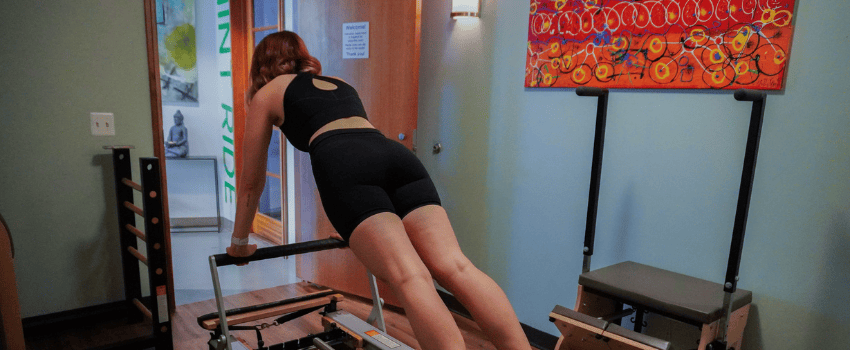
MINT offers a number of 50-minute Power Row classes each week, and one 90-minute Endurance Row class. If you’re not yet hooked, read ahead to learn why you should be – you might be surprised at the benefits this full-body exercise can offer.
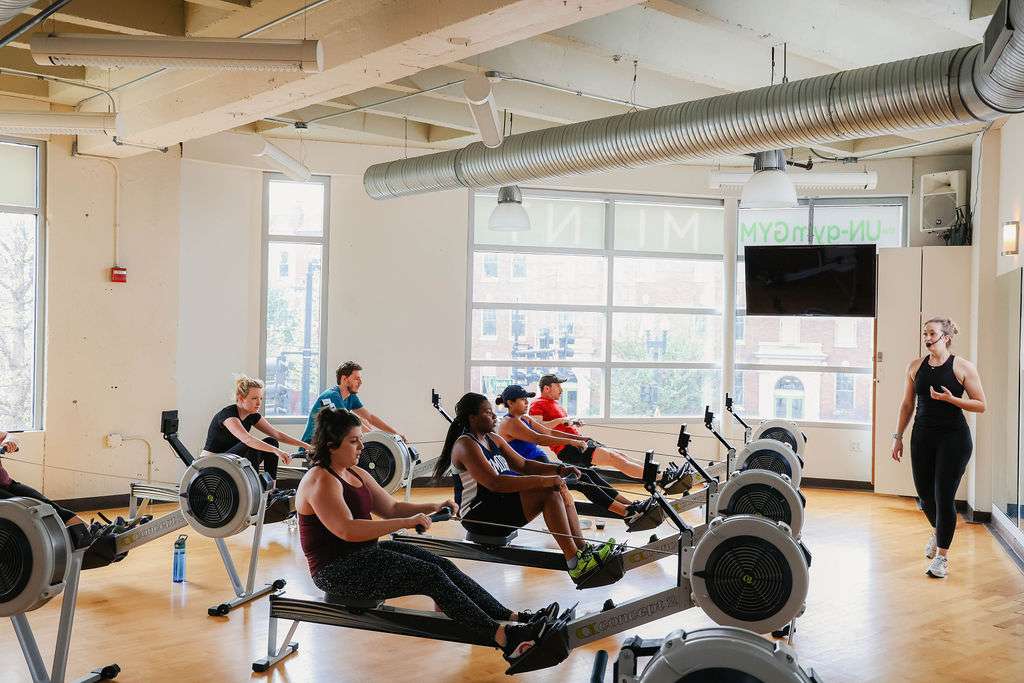
What is indoor rowing, and how do you do it?
Did you know rowing is an all-season sport? Turns out you don’t need to suffer through winter on the freezing Potomac to row through winter. Indoor rowing is completed on a machine called the “erg,” short for “ergometer,” that simulates the motion of rowing in a boat while measuring effort. MINT uses top-of-the-line Concept2 Rowers with adjustable foot holds, a comfortable seat and grip, and an easy-to-use retractable screen.
Who can do it?
Rowing is a great exercise for everyone, regardless of age, weight, height, or fitness level. Because of its low-impact nature, it’s a safe and beneficial activity for almost anyone. Unlike a treadmill or elliptical, where you can adjust resistance or incline, the erg machine responds only to your effort – leaving you totally in control of the intensity level. Whether you’re looking to sweat it out with power strokes or slow it down through stamina and recovery, you decide how hard (or easy!) to take it. If you’ve never done it before, experienced instructors will help you set up and use the machine, and give tips on form.
Why is it good for me?
The action of rowing engages the entire body, yielding an effective and balanced workout with little to no impact. Mimicking the motion of rowing a boat, the erg engages muscles in the upper and lower body. It not only strengthens and tones, but can also help increase flexibility. As a repetitive motion that requires coordination across multiple body parts, it can help improve mental focus too. And because it helps strengthen the back and core, it can also improve your posture. It’s an exercise that has benefits to nearly every part of your body!
When can I row at MINT?
There are many opportunities to row at MINT! Row classes are offered five days a week from our stellar instructors Braegan Padley (MINT’s Intensity Director) and Anne Avendt. The signature Power Row classes are 50-minutes of high intensity – think short bursts of all out effort balanced by slower recovery periods. Some classes combine rowing intervals with strength exercises, resulting in a perfect mix of cardio and full-body strength training. The once-weekly (and very popular) 90-minute Endurance Row class slows down the pace. Rather than high intensity sprints, this low-impact class features longer intervals and slower stroke rates. Designed for those looking to build stamina, refine their form, or have an active recovery workout, this class welcomes all levels of experience.
MINT strives to offer our members innovative ways of improving their workout experience. We love introducing new classes to challenge your fitness and push you to expand your exercise comfort zone. Mixing up your workouts helps balance the types of exercise your body undergoes, activating new and different muscles, while also engaging your brain as you learn new movements.
One of the newest classes on the schedule is Core Bosu Blast, taught by Tali Israeli. If you love Tali’s Slow Burn Sculpt classes, check out this new core-focused offering. Using the versatile BOSU ball, this class focuses on strengthening and toning your core muscles while also improving balance and coordination. Designed for all fitness levels, this fun, high-energy workout combines functional movements and targeted exercises using the BOSU ball to challenge your muscles, build a strong foundation, and enhance stability. You will definitely feel the burn as you transform your core!
The BOSU ball, the primary piece of equipment for this class, is similar to an inflatable stability ball but about half the size and with a flat, hard plastic bottom. It is often used in balance exercises, and can be used with either the round or flat side up. It not only helps improve coordination, but also agility and strength.
If your 2025 goals include getting a six-pack or simply improving your overall posture and strength, MINT offers three core-focused classes: Core Bosu Blast, Core Circuit, and MINTCore (a shorter, 25-minute class). Try them all, and let us know which is your favorite!

Whether you’re new to barre or a seasoned participant looking to refine your form, our 90-minute Breaking Down Barre workshop is designed to help you move with confidence and control. Join Audrey on Saturday, April 19th at 1:15 PM for an interactive session that breaks down the fundamentals of barre, ensuring you get the most out of every class.

What to Expect
In this hands-on workshop, you’ll:
✅ Perfect Your Form – Learn how to engage your muscles effectively for a full-body workout.
✅ Customize Your Movements – Discover modifications and advancements tailored to your needs.
✅ Ask Questions in a Supportive Space – Gain clarity on technique, posture, and positioning.
✅ Receive 1-on-1 Coaching from Audrey – Get personalized feedback to enhance your practice.
This workshop is an opportunity to build strength, deepen your understanding of barre, and feel empowered in every movement—whether you’re stepping up to the barre for the first time or looking to level up.
Spots are limited! Reserve your spot on the MINT schedule.
We know that exercise has many health benefits, including simply making you feel good. But what exactly happens in your body when you start exercising? Here’s a breakdown on how your body responds to moderate-to-intense movement.
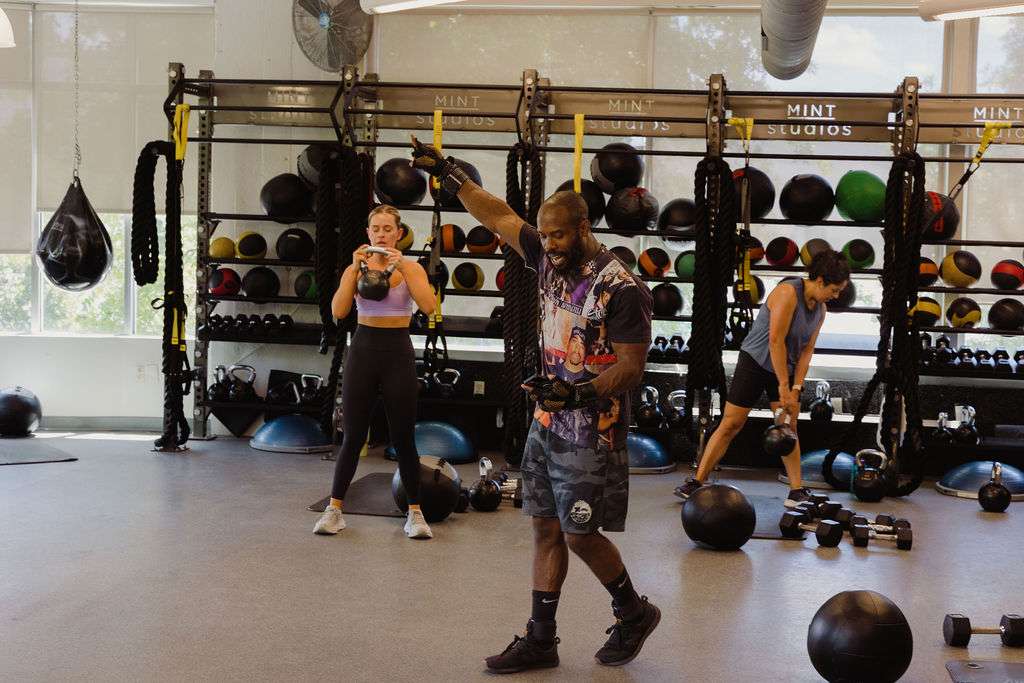
- Heart rate increases
The first thing you might notice when you begin moving – even in small amounts – is an increase in your heart rate. Sometimes this can happen even before you start exercising, an effect called an “anticipatory increase.” This is caused by a stress hormone that gets your body ready for more movement. As your workout continues, this process escalates. Heart rate typically rises by 20 to 50 beats per minute during exercise.
- Blood pumping
As your heart rate increases, blood pressure also rises, and the combination of the two leads to greater blood flow. Your body then directs that blood towards your muscles, providing them the oxygen and nutrients needed to adapt and grow with increased exercise.
- Breathing intensifies
One of the most noticeable effects of exercise is harder and quicker breathing. With especially intense exercise, you might feel burning or tightness in your chest. When you exercise, you increase your body’s need for oxygen because it’s working harder – therefore, your lungs need to take in more oxygen, which results in faster, harder breathing.
- Brain boost
You receive mental benefits within minutes of beginning exercise, as your brain becomes activated in the “priming stage.” This happens due to the above factors: increased heart rate, blood flow to muscles, and oxygen intake. The mood boosting side effects can include better focus and alertness, an adrenaline-fueled energy burst, and eventually, a calming effect as you settle into exercise.
Sometimes getting started can be the hardest part of your workout, and now you can see why! But these bodily reactions set you up for peak performance and long-term better health.
What sensations do you experience when you work out? Do you relate to the above responses, or do you feel other effects?