Reclined Bound Angle Pose, or Suptabaddhakonasana
- This is one of my favorite hip-openers. I usually will either start a yoga session in this pose for centering, or end in this pose—right before shavasana.
- Start by lying on your back.
- Palms face up, shoulder blades draw together and away from the ears.
- Feet come together and knees butterfly open.
- Gently close the eyes.
- Release any unnecessary tension in your neck and face.

Ashley Binetti received her 200-hour vinyasa yoga teacher training at Saraswatis’s Yoga Joint in Norwalk, CT in 2011. Her favorite pose is Triangle. When she’s not doing yoga, Ashley works as a nonprofit attorney. She is also a MINT Ambassador.
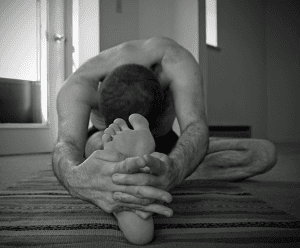
Head-to-Knee Forward Bend, Janusirsasana
- Begin by sitting with both legs stretched out in front of you on your mat.
- Bend the right leg, bringing the right foot in towards the groin.
- Sit firmly in your seat, ensuring contact between your sits bones and the mat. It might help you use your hands to lift the buttocks.
- Engage uddiyanabandha, bringing the belly button in and up towards the spine. This will help you fold more deeply. This is not an instruction to hold the breath. Continue to breathe fully.
- Fold over the extended leg.
- Hands can rest on the thigh or shin, or grip the feet. For a deeper stretch, you can hold a block behind your feet or use a strap.
- Release any unnecessary tension in your neck and face.
- After you are done, try the pose on the other side to even out the body.

Ashley Binetti received her 200-hour vinyasa yoga teacher training at Saraswatis’s Yoga Joint in Norwalk, CT in 2011. Her favorite pose is Triangle. When she’s not doing yoga, Ashley works as a nonprofit attorney. She is also a MINT Ambassador.

Fire Log Pose, Agnistambhasana
- Start in a gentle cross-legged sitting pose.
- The lower half of your legs will stack like fire logs in this position (hence the name of the pose).
- Take the left leg and rest it on top of the right leg. Flex both feet to protect the knees.
- If your left knee doesn’t quite reach your right foot, use a blanket to support the knee.
- Sit up tall stretching through the spine, and then fold forward. Again, if your left knee isn’t quite reaching your right foot comfortably, bend towards that knee. If you are warm enough in the body, you can stretch straight out in front of you.
- Release any unnecessary tension in your neck and face.
- After you are done, try the pose on the other side to even out the body.
- This pose is a great alternative to resting half-pigeon—both give the glutes a nice stretch.
Ashley Binetti received her 200-hour vinyasa yoga teacher training at Saraswatis’s Yoga Joint in Norwalk, CT in 2011. Her favorite pose is Triangle. When she’s not doing yoga, Ashley works as a nonprofit attorney. She is also a MINT Ambassador.

Boat Pose, Navasana
- Sit on the mat, stretching the legs straight out in front of you.
- Engage uddiyanabandha, bringing the belly button in and up towards the spine. This is not an instruction to hold the breath. Continue to breathe fully.
- Raise the legs, bringing your body into a “V” shape. If this is too intense on your back, generously bend your knees. If this is still too intense, you can gently rest your feet on the floor, keeping your knees bent.
- Toes are spread wide and feet are flexed.
- Arms are stretched out in front, palms face up.
- Spin is straight, shoulders roll back and down the spin, should blades come together at the midline. The heart shines towards the ceiling.
- Release any unnecessary tension in your neck and face.
- This pose is a great for abdominal toning, and also helps improve back strength.
Ashley Binetti received her 200-hour vinyasa yoga teacher training at Saraswatis’s Yoga Joint in Norwalk, CT in 2011. Her favorite pose is Triangle. When she’s not doing yoga, Ashley works as a nonprofit attorney. She is also a MINT Ambassador.
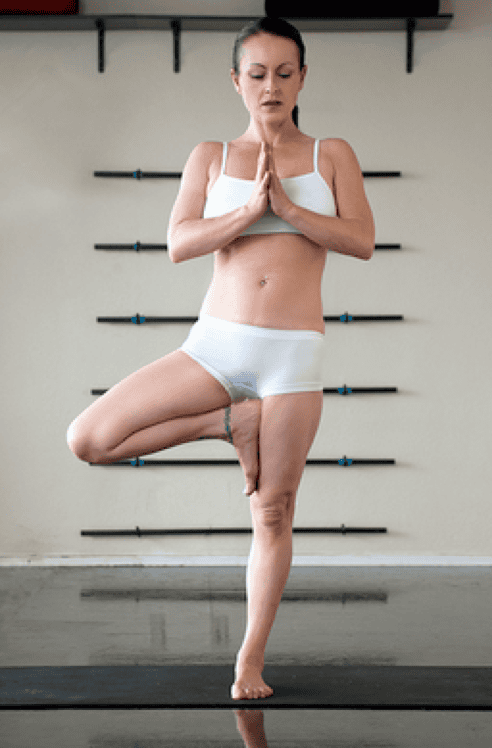
Tree Pose, Vrksasana
- Stand in tadasana at the top of your mat.
- Bend the right leg, and place the foot at the left ankle, calf, or upper thigh. Never rest the foot directly on the knee.
- Raise your arms towards the sky. Shoulders roll up and down the spin, away from the ears. Shoulder blades come together at the midline.
- Arms slightly externally rotate, meaning that palms begin to face towards the back of the mat.
- Hip points should face out equally in front of you, and your bent knee should extend towards the right.
- Release any unnecessary tension in your neck and face.
- For a challenge, try balancing while closing your eyes, and/or gently swaying your arms like a tree in the wind.
- After you are done, try the pose on the other side to even out the body.
Ashley Binetti received her 200-hour vinyasa yoga teacher training at Saraswatis’s Yoga Joint in Norwalk, CT in 2011. Her favorite pose is Triangle. When she’s not doing yoga, Ashley works as a nonprofit attorney. She is also a MINT Ambassador.
Disclaimers: Consult a doctor before beginning an exercise regime. Never force a pose. Stop if you feel pain or intense discomfort. Yoga is meant to be yummy.
I love vinyasa yoga and I am obsessed with good alignment. This obsession doesn’t stem from a need for perfection, which would be very “un-yoga-like” of me, but from a passion for protecting the body from injury. Most bodies can safely practice yoga on a daily basis, but maintaining sound alignment is essential to your physical wellbeing. In this series, I will break down some common poses—explaining how to stay safe and fully enjoy each posture. Finally, remember to BREATHE consistently while practicing yoga to receive the full benefits of the practice … otherwise, you’re just stretching in Sanskrit. Today’s pose is Extended Side Angle, or Utthita Parsvakonasana.

Extended Side Angle, Utthita Parsvakonasana
- Start in Warrior Two.
- Bend towards the right leg (which should be maintained with a 90-degree bend in the knee), bring your right hand to the ground inside of your right foot. Alternatively, the hand can rest on a block, or you can rest your forearm on the thigh.
- Your left hand extends from your body, sweeping over your left ear. Be careful not to over-extend to the point where the shoulder is reaching out of the shoulder socket.
- With each inhale, lengthen, and then with the exhale, twist to shine your heart towards the ceiling.
- You can look towards the ceiling, out in front of you, or towards the ground if it is more comfortable.
- Release any unnecessary tension in your neck and face.
- After you are done, try the pose on the other side to even out the body.
Ashley Binetti received her 200-hour vinyasa yoga teacher training at Saraswatis’s Yoga Joint in Norwalk, CT in 2011. Her favorite pose is Triangle. When she’s not doing yoga, Ashley works as a nonprofit attorney. She is also a MINT Ambassador.

Triangle, Uttihita Trikonasana
- Start in Warrior Two. Shorten the stance so that your feet are about three feet apart.
- Straighten the bent leg, maintaining a gentle bend in the knee.
- Bend towards the right, bringing your right hand towards your right foot. The hand can rest on the ankle, on a block, or on the mat.
- Your left hand extends from your body straight up.
- With each inhale, lengthen, and then with the exhale, twist to shine your heart towards the ceiling. Imagine you are between two panes of glass—you want your body to fit nicely in that plane of space.
- You can look towards the hand that is stretched overhead, out in front of you, or towards the ground if it is more comfortable.
- Release any unnecessary tension in your neck and face.
- After you are done, try the pose on the other side to even out the body.
Ashley Binetti received her 200-hour vinyasa yoga teacher training at Saraswatis’s Yoga Joint in Norwalk, CT in 2011. Her favorite pose is Triangle. When she’s not doing yoga, Ashley works as a nonprofit attorney. She is also a MINT Ambassador.
Disclaimers: Consult a doctor before beginning an exercise regime. Never force a pose. Stop if you feel pain or intense discomfort. Yoga is meant to be yummy.
I love vinyasa yoga and I am obsessed with good alignment. This obsession doesn’t stem from a need for perfection, which would be very “un-yoga-like” of me, but from a passion for protecting the body from injury. Most bodies can safely practice yoga on a daily basis, but maintaining sound alignment is essential to your physical wellbeing. In this series, I will break down some common poses—explaining how to stay safe and fully enjoy each posture. Finally, remember to BREATHE consistently while practicing yoga to receive the full benefits of the practice … otherwise, you’re just stretching in Sanskrit. Today’s pose is Standing Forward Fold, or Uttanasana.

Standing Forward Fold, Uttanasana
– Feet should be hip-distance apart, or where your feet would naturally land standing (people have a tendency to interpret “feet hip-distance apart” as meaning feet on the edges of your mat—this is much farther than the distance of your hips. To measure, you should be able to place both of your fists between your feet).
– Toes spread wide and gripping into the mat. Weight is evenly distributed throughout the feet.
– Engage uddiyanabandha, bringing the belly button in and up towards the spine. This will give you more space to fold forward. This is not an instruction to hold the breath. Continue to breathe fully.
– Maintain a generous bend in the knees, especially if this is one of your first forward folds of the day. If you have more flexibility and would like to go deeper, maintain a gentle bend in the knees.
– Hands can rest on thighs, shins, or on the mat below you. If you’d like, you can bring hands to opposite elbows and hang freely in your forward fold.
– Release any unnecessary tension in your neck and face. Shake the head “yes,” shake the head “no.” Then find stillness.
Practicing yoga on your own can be a ton of fun, but taking a class is a great way to explore new poses under the tutelage of a trained yoga instructor; check out MINT’s yoga offerings, here.
Ashley Binetti received her 200-hour vinyasa yoga teacher training at Saraswatis’s Yoga Joint in Norwalk, CT in 2011. Her favorite pose is Triangle. When she’s not doing yoga, Ashley works as a nonprofit attorney. She is also a MINT Ambassador.
Disclaimers: Consult a doctor before beginning an exercise regime. Never force a pose. Stop if you feel pain or intense discomfort. Yoga is meant to be yummy.
I love vinyasa yoga and I am obsessed with good alignment. This obsession doesn’t stem from a need for perfection, which would be very “un-yoga-like” of me, but from a passion for protecting the body from injury. Most bodies can safely practice yoga on a daily basis, but maintaining sound alignment is essential to your physical wellbeing. In this series, I will break down some common poses—explaining how to stay safe and fully enjoy each posture. Finally, remember to BREATHE consistently while practicing yoga to receive the full benefits of the practice … otherwise, you’re just stretching in Sanskrit. Today’s pose is: Mountain Pose, or Tadasana.

Mountain Pose, Tadasana
– Tadasana is a strong pose. Start by placing your feet hip-distance apart. This is probably where your feet would naturally land standing (people have a tendency to interpret “feet hip-distance apart” as meaning feet on the edges of your mat—this is much farther than the distance of your hips. To measure, you should be able to place both of your fists between your feet).
– Toes spread wide and gripping into the mat.
– Spine is long.
– Bring your shoulders up to your ears, then gently release them down, allowing your shoulder blades to come together at the midline.
– Palms face up, fingertips spread wide.
– Heart shines towards the sky.
– Release any unnecessary tension in your neck and face.
Practicing yoga on your own can be a ton of fun, but taking a class is a great way to explore new poses under the tutelage of a trained yoga instructor; check out MINT’s yoga offerings, here.
Ashley Binetti received her 200-hour vinyasa yoga teacher training at Saraswatis’s Yoga Joint in Norwalk, CT in 2011. Her favorite pose is Triangle. When she’s not doing yoga, Ashley works as a nonprofit attorney. She is also a MINT Ambassador.