
There are a million reasons indoor cycling has become so popular in DC — tons of indoor riders are clipping in, riding hard, and rocking out with great beats for a 45 or 60-minute escape from everything that awaits them in the real world. Here at MINT you can do that with MINTRide, Rhythm Ride, Tour de MINT, Fuze, and Rise ‘N Ride.
While indoor cycling is based on outdoor cycling, many indoor riders prefer to ride solely inside, and the sport fits all kinds of fitness levels! Whether your goal is to train for a race, build endurance, lose weight, or just to find some zen, read on for some tips on heart rate monitoring, cadence levels and pedal stroke drills that will help you maximize your indoor ride!
Heart Rate:
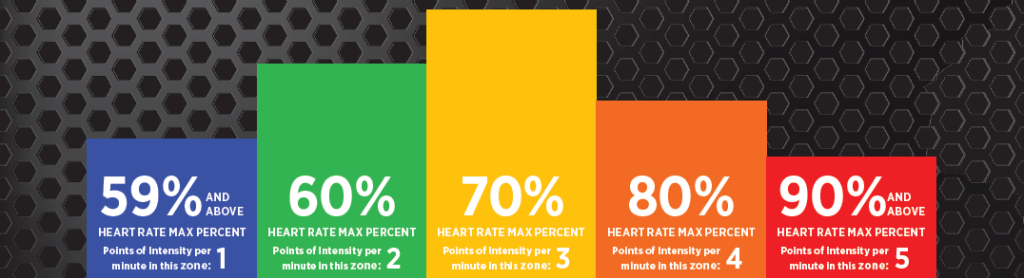
MINT offers free PIQ monitors for all indoor cycling classes. These devices track your heart rate and calories burned throughout the entire ride, so not only do you get to monitor your work class, you get an email summary of your workout at the end so you can track your progress and tally up those calories burned. We promise you won’t have to do any math at all, really — we’ve put charts up in all of our cycle studios that list the target heart rate ranges for every age, so as your ride, you can monitor your range accordingly.
Your best training is when you’re working at about 80% of your maximum heart rate (roughly 220-your age x .80)
So if you’re cycling regularly, the challenge is to:
- See how long you can stay in that target range, even when you’re adjusting the resistance and the cadence.
- How quickly your heart rate can recover when it goes above the 80% threshold.
Your instructors and MINT staff are here to make the information as accessible as possible, so if you have any questions about the system or your heart rate levels, just ask!
Cadence:
We measure our cadence using RPMs (revolutions per minute) because that’s how many times you’re completing a full revolution with your pedal (instead of miles per hour, MPH, which is just how fast you’re pedaling forward).
Different RPMs and speeds engage different muscles, which is why cycling can be such a great workout. As you’ve surely seen during class, maintaining the same cadence while increasing or decreasing the resistance makes dramatic changes in the intensity of your workout (and heart rate range too)! Generally, some cadence guides to keep in mind are:
- RPMs lower than 50-60 are bad for the back and knees.
- RPMs higher than 110-120 are too fast to remain in control of the pedals.
- If you’re riding all the time, the goal is to find your preferred flat road cadence — for most people, it’s somewhere between 88 and 94 RPMs indoors — and then try to challenge yourself a little bit each week to improve from there.
Pedal Stroke Drills:
Even if you’re never planning to take your bike outside, a quicker pedal stroke will help you burn more calories indoors.
- One drill you can try to further refine your pedal stroke is to make it more efficient. Here’s how: Think of the circular motion of your stroke as a clock. You want to spend the least time between four and six, or on the “sweep” — think of that as hot lava that you don’t want to touch. If you set-up your stroke between 12 and 3, try to start your pull-up earlier — instead of pulling up at 5 or 6, start your pull-up 4 or 5. You’ll find that a faster pull-up makes for a quicker stroke, and soon you’ll be on your way to faster RPMs!
Putting this all together with heart rate monitoring and a more attentive eye on your cadence computer will help ensure that you’re not just coming to class and sweating out everything you have, but really maximizing your effort and improving your overall health over time.
If you haven’t tried an indoor cycling class at MINT yet, or are a regular rider and want to test out some of these new tricks, come visit us soon — each class and instructor offer something different and we’re looking forward to seeing you on the bike!
 True story: Ori (a MINT cycling instructor) walked out of her first indoor cycling class five years ago midway through the second song. Ori has been teaching rhythm-based rides in DC since 2014. Follow her on Instagram (OKorin) or Spotify at (OKorin10) for good jams and photos of her late rescue pup, President Josiah Bartlet the Beagle.